
Ecotherapy can help us understand the way Jesus heals our bodies, minds, and spirits.
Many pastors and Christian leaders are carrying an awareness that something is not whole. You see it in your congregation and you feel it in your own body. Chronic pain that lingers. Stress that never quite lifts. Anxiety, burnout, and fatigue that seem to settle in as normal. Acute crises that come without warning. These are not just physical realities. They touch the soul.
We often respond by trying to fix the symptoms. When that doesn’t work, it can leave both leaders and communities feeling like the burden rests on them to make things better.
But what if the healing that Jesus offers is not something we generate? What if it is something we notice, receive, and step into?
Ecotherapy is becoming one way that Christians understand and participate in the healing ministry of Jesus.
What Is Ecotherapy and Why It Matters for the Church
Ecotherapy is a simple idea. It recognizes that time in creation has measurable effects on our physical and mental well being. It also recognizes something deeper. We are not separate from creation. We are part of it.
Research continues to show that time outdoors can reduce cortisol levels, improve mood, lower blood pressure, and support overall mental health. Even brief exposure to green spaces has been linked to reduced anxiety and increased clarity of thought. People who regularly spend time in nature often report feeling more grounded, less overwhelmed, and more connected.
For many Christian leaders, this aligns with what you have already observed. People come alive when they step outside. Conversations soften. Prayer feels less forced. Presence becomes easier. We are more aware of the wonder and majesty of God through creation.
Ecotherapy gives language to what creation has been offering all along. It reminds us that the body is not an obstacle to spiritual life. It is part of how we encounter God.
Ecotherapy and the Reality of Our Bodies
We live in a moment where bodies can feel fragile. Not just because of aging or illness, but because of the pace and pressure of modern life. Many leaders carry stress in their shoulders, in their sleep, in their relationships. Many communities are navigating depression, trauma, and chronic exhaustion.
It can feel like something is constantly breaking down.
And yet, Scripture never treats the body as secondary. The incarnation is God’s final word on the subject: bodies matter. Jesus did not come only to address ideas or beliefs. He healed bodies. He restored sight and hearing. He calmed nervous systems. He welcomed people into wholeness that included physical, emotional, and spiritual healing.
When our bodies are strained, it is not just a medical issue. It is a relational one. Our relationship with God, with ourselves, with others, and with creation has been disrupted.
Ecotherapy does not replace other forms of care. But it gently reintroduces a missing relationship. It invites people back into a world that is not asking anything from them, but one in which God is graciously offering restoration.
Ecotherapy Through Sacred Hikes: A Simple Practice
One of the most accessible expressions of ecotherapy is something very simple: walking.
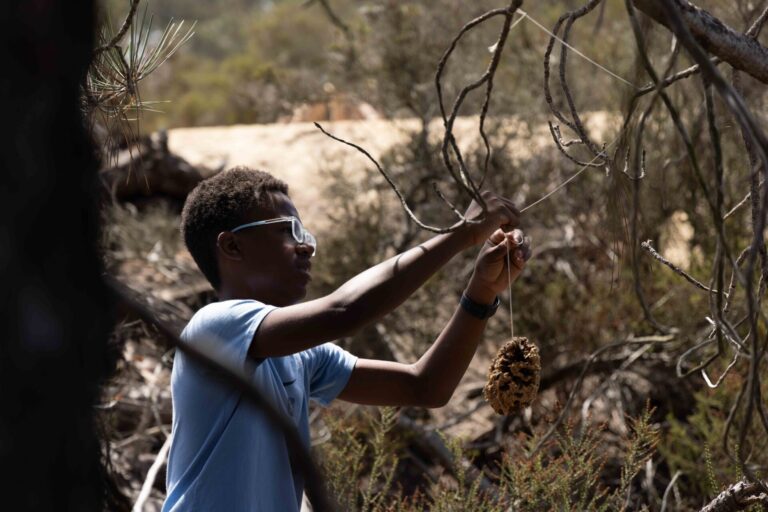
Walking takes something familiar and slows it down. Instead of rushing through a trail, people move with intention. They notice the ground beneath their feet. They pay attention to light, sound, and breath. They allow space for reflection, prayer, and conversation.
There is no pressure to perform. No need to teach. No expectation to produce insight. For those who are unable to walk, you don’t even have to use your legs. If you’re able to move slowly through creation, you’re able to gain the benefits of walking.
When people walk, they begin to settle. Physically, their bodies start to regulate. Breathing deepens. Muscles release tension. The nervous system shifts from alertness to calm.
Emotionally, something opens. Conversations become more honest. People share what they have been carrying without needing to solve it.
Spiritually, awareness grows, not in a forced way but in a quiet recognition. God is already present here.
For many leaders, this is a surprising experience. You do not have to manufacture a moment. You do not have to create meaning. You simply create space and trust that God is already at work.
If walking already feels like a natural way to slow down and reconnect, Sacred Hikes offer a simple way to turn that instinct into a shared spiritual rhythm. As an Earthcare Activity within Tend, Sacred Hikes help groups move beyond just being outside to intentionally noticing, reflecting, and experiencing God’s presence together in creation.
When Leaders Feel the Pressure to Fix Everything
Most pastors and leaders know the weight of responsibility. You care deeply about your people. When someone is hurting, you want to help. When a community feels disconnected, you want to bring it together.
Over time, this can become pressure. A sense that you need to initiate change, solve problems, and carry outcomes.
This pressure often leads to fatigue, not because the desire is wrong but because the posture becomes heavy.
Ecotherapy invites a different posture.
Instead of fixing, you begin to notice. Instead of controlling, you begin to receive. Instead of carrying everything, you begin to participate in something already unfolding.
When a group steps into creation together, the responsibility shifts. Creation itself becomes part of the care. The pace slows. The expectations lower. People are allowed to simply be present.
And in that presence, something begins to heal.
A Biblical Vision of Healing in Creation
Scripture does not ignore the reality of physical suffering. In the story of Job, we meet a man whose body begins to break down in painful and visible ways. His suffering is not only physical. It becomes emotional and spiritual. Job loses his sense of stability, his clarity about God, and even his place in the world. His words begin to reflect what many people feel today: Confusion. Isolation. An internal unraveling.
When God responds, God does not offer a clinical explanation or a step-by-step solution. Instead, the Creator of the Universe invites Job to look outward. God begins to speak of wild animals, weather patterns, stars, and landscapes. God re-places Job within the vast, interconnected web of creation. Job is reminded that he is not alone, not forgotten, and not at the center of sustaining the world. There is a living system held together by God’s care.
Something shifts in Job, not because all his pain is immediately removed but because his perspective is restored. He is no longer trapped inside his suffering. He is reoriented within a world that is alive, ordered, and held by God.
We see this same pattern in the life of Jesus. Again and again, He addresses people’s physical need while restoring their place in relationship with God, others, and the world around them. Jesus’ healing was never just about symptom relief. It is about bringing people back into wholeness. He taught outdoors, withdrew to quiet places, prayed in gardens, and restored people in the midst of everyday environments. Healing happened in the context of presence, relationship, and creation.
This is where ecotherapy begins to resonate deeply with the biblical story. When people step into creation, they are not escaping reality. They are being gently re-placed within it. Like Job, they are reminded that their lives are held within something larger. Like those who encountered Jesus, they experience healing that touches body, mind, and spirit together.
And the larger story of Scripture points toward the reconciliation of all creation. From the garden in Genesis to the renewed creation in Revelation, God is restoring relationships between people and God, between people and one another, and between humanity and the Earth itself.
This means healing is not something we initiate by ourselves. It is something God is already doing and invites us to join.
When people walk through a forest, sit near water, or breathe in open air, they are not retreating into solitude. They are entering the community of creation where God’s restorative work is ongoing.
Ecotherapy becomes a simple way of participating in this restoration. Not by striving to fix what is broken, but by stepping into spaces where God is already sustaining, already speaking, and already making things whole.
Why Time in Nature Changes Us
The impact of time in nature is both simple and profound.
Physically, the body responds to natural environments in measurable ways. Heart rates slow. Stress hormones decrease. Sleep often improves. These are not abstract benefits. They are tangible shifts that many people feel quickly.
Mentally, time in creation provides relief from constant stimulation. Screens, noise, and pressure create a kind of overload. Being outside offers a different rhythm. Attention softens. Creativity returns. People often report greater clarity and emotional resilience.
Socially, shared experiences in nature tend to lower barriers. Walking side by side can feel safer than sitting face to face. Conversations flow more naturally. Relationships deepen without effort.
Spiritually, something else happens. People begin to sense that they are part of something larger. Gratitude surfaces. Prayer becomes less scripted and more responsive. There is a profound recognition that the Creator is near.
Ecotherapy as a Practice for the Church Today
For churches, ecotherapy is not about adding another program. It is about recovering a way of being. It fits naturally into the life of a community. It requires very little preparation. It is accessible to people across ages and stages of life.
Sacred Hikes, in particular, create a rhythm that is easy to repeat. A group gathers. They walk. They notice. They reflect. They share.
Over time, this rhythm builds trust. It creates space for both believers and neighbors to participate together. It allows faith to become visible in simple, embodied ways.
This is where Tend comes in.
Tend is an initiative of Plant With Purpose that equips churches to join Jesus in the restoration of all creation through simple, shared practices. It is not a program to manage but a path to walk. Through practices like Sacred Hikes, churches learn to engage their neighborhoods, bodies, and faith in ways that feel sustainable.
It is low preparation. It is relational. It fits real life.
And perhaps most importantly, it removes pressure. Leaders do not have to create transformation. They simply create space for people to step into what God is already doing.
A Different Kind of Healing
The challenges facing our bodies are real. Chronic pain, stress, and mental health struggles are not easily resolved. They require care, attention, and often professional support.
But alongside those responses, there is an invitation:
To step outside.
To slow down.
To notice what God has already made.
Ecotherapy reminds us that God is healing the cosmos, and we are invited to receive part of that healing before we try to manufacture it.
In creation, people often rediscover a sense of belonging. They remember that they are not alone. They begin to experience small but meaningful shifts in body and soul.
For leaders, this can be freeing. You do not have to carry everything. You don’t have to be the source of healing for the ones you lead. You can guide people into healing outdoor spaces where God is already at work.
And you may find that your own body begins to heal in the process.
If you are curious how this might look in your context, you can explore the Sacred Hike Earthcare Activity in Tend. It is a free, simple, and communal way to step into creation together and experience the kind of healing that touches both body and soul.