Before I was building Tend, I was pastoring a church that ran missional communities, and I watched two very different groups try to love their neighbors. One group served their neighbors faithfully for years and slowly ran out of steam. The other group engaged in a different kind of project and something shifted. A pastor in Compton saw the exact same shift happen on a much bigger stage, turning a gang-ridden, vacant lot into common ground. The difference wasn’t effort or sincerity. It was who got to participate. This post is about the big difference between doing something FOR your neighbors and doing something WITH them, and why creation care might be one of the best on-ramps we have for the second kind.
Three Things Every Missional Community Needs
Years ago, I oversaw missional communities at a church of about 400 people. We had thirteen of these groups running at once, which meant most members of our congregation belonged to one. Each group was sized like an extended family, somewhere between 15 and 30 people, kids and grandparents included, and they practiced their faith together, around tables, in homes, nursing homes, parks, and the church rec room.
At its simplest, a missional community is a group of Christians practicing their faith together in everyday life while joining what God is already doing in their neighborhood.
When the Holy Spirit fanned missional communities into flame, we noticed there were always three things present. First, the Holy Spirit had inspired real spiritual leadership, people willing to shepherd others even when they didn’t feel qualified. Second, those leaders had discerned and established predictable rhythms, shared practices the group could return to again and again until those practices became part of their identity. Third, the Holy Spirit gave the group a genuine missional purpose, some way the group was joining what God was already doing in their neighborhood. Leadership, rhythm, and purpose. Thriving groups always had all three.
I want to be clear about something before I go further. Gathering on Sunday morning, hearing the word preached, and taking communion with your church family is not the small version of faith, and missional communities are not the deluxe upgrade. Sunday worship is itself one of the most important practices a Christian has. What I kept discovering, though, was that most of us needed more than one integrated rhythm of life to actually live out what we believed. Sunday gave us inspiration, teaching and celebration. Missional community gave us belonging, purpose, and the courage to get out in the neighborhood, practicing faith with our neighbors.
Carol and Wayne
One of our missional communities was led by a couple named Carol and Wayne. Carol was maybe five foot two. Wayne was a farmer who topped out somewhere over six foot four, and if you ever saw the two of them walking into a room together you’d remember it. Though Carol would have to stand on a stool to look half his size, she was the brave one. When we first asked them to lead a missional community, Wayne wanted absolutely nothing to do with it. Leading people, having conversations about faith, standing in front of a room, none of that was in his wheelhouse. He was much more comfortable on a tractor than at a podium.
But somehow Carol got Wayne to be part of a missional community before leading one, and something happened: he watched someone else do it imperfectly, and it gave him permission to try it imperfectly too. Slowly he stepped into leadership alongside Carol, and one of the first decisions their new group had to make was choosing a missional purpose. They landed on the local rescue mission. Every other week, their group left their nice houses and drove downtown to serve dinner to men and women experiencing homelessness.
This was a genuinely faithful choice. Carol and Wayne’s group was, by and large, upper middle class, and like most of us, they tended to spend their time with people who looked and lived a lot like they did. Left on our own, humans sort ourselves by income and background more than we’d like to admit. So watching this group cross that line on purpose, serving dinner to people whose lives looked nothing like theirs, was beautiful. Carol and Wayne’s group asked bigger questions about their faith. Their world got larger. They got to know Jesus better, the one who came not to be served but to serve, and give His life as a ransom for many (Mark 10:45). This group was living out their faith with their hands, one Tuesday night at a time.
The Serving Table Problem
But after a few years, Carol and Wayne came to me with a problem. They were still serving faithfully, but something had stalled. None of the people they served at the rescue mission were ever becoming part of their community. Nobody crossed over their threshold. Nobody from the mission ever showed up at a cookout, or a Bible study, or a birthday party. The relationship stayed exactly where it started, on either side of a serving table.
What an ironic dynamic. The table that connected them to people in real need was at the very same time physically and relationally dividing them. One side served. The other side was served. Every single week reinforced the same roles. It’s not that anything they were doing was wrong. It’s that a server-client relationship, however loving, has a ceiling. It can’t become mutual on its own. The good news is that Carol and Wayne’s group continued to serve faithfully. They planned for months in advance to have special outings (with permission from the rescue mission) to have gatherings in new spaces where they could build mutuality into the relationship. The struggle was a good one, and over time those new spaces gave relationships room to become more mutual.
Meanwhile, We Started a Compost Pile
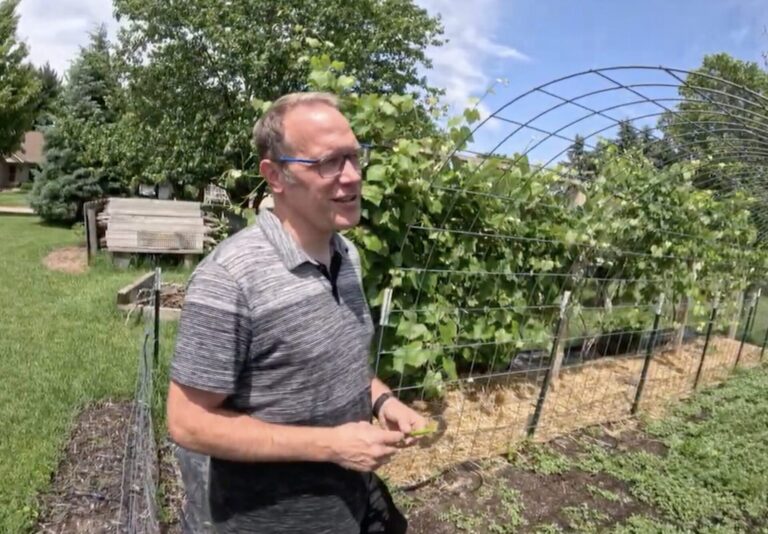
At the same time, the missional community I was personally part of chose a different kind of mission. Instead of picking something to do for our neighbors, we picked a composting project we could do with them. And somewhere in the middle of turning that pile of banana peels and yard clippings with people from our block, something clicked for me that I hadn’t seen clearly before.
Creation care does something that a lot of other forms of evangelism simply can’t. When you’re kneeling in dirt next to someone, picking up trash or turning a compost bin or planting tomatoes, there’s no table between you. Nobody is the expert and nobody is the client. Your neighbor who’s never opened a Bible in her life can out-garden you without even trying, and that’s the whole point. You’re standing on the same level ground, literally, hands in the same soil.
That’s the piece I think we often miss when we think about loving our neighbors. Our neighbors are different from us, sometimes wildly different, and if all we ever offer them is a program to receive, we can accidentally keep the divide in place even while we’re trying to close it. But when we invite our neighbors into something we’re doing together, something as ordinary as a garden bed or a neighborhood cleanup, we’re no longer the ones with something to give and they’re no longer the ones with a need to be met. We’re just neighbors, side by side in the kingdom of God.
Common Ground in Compton
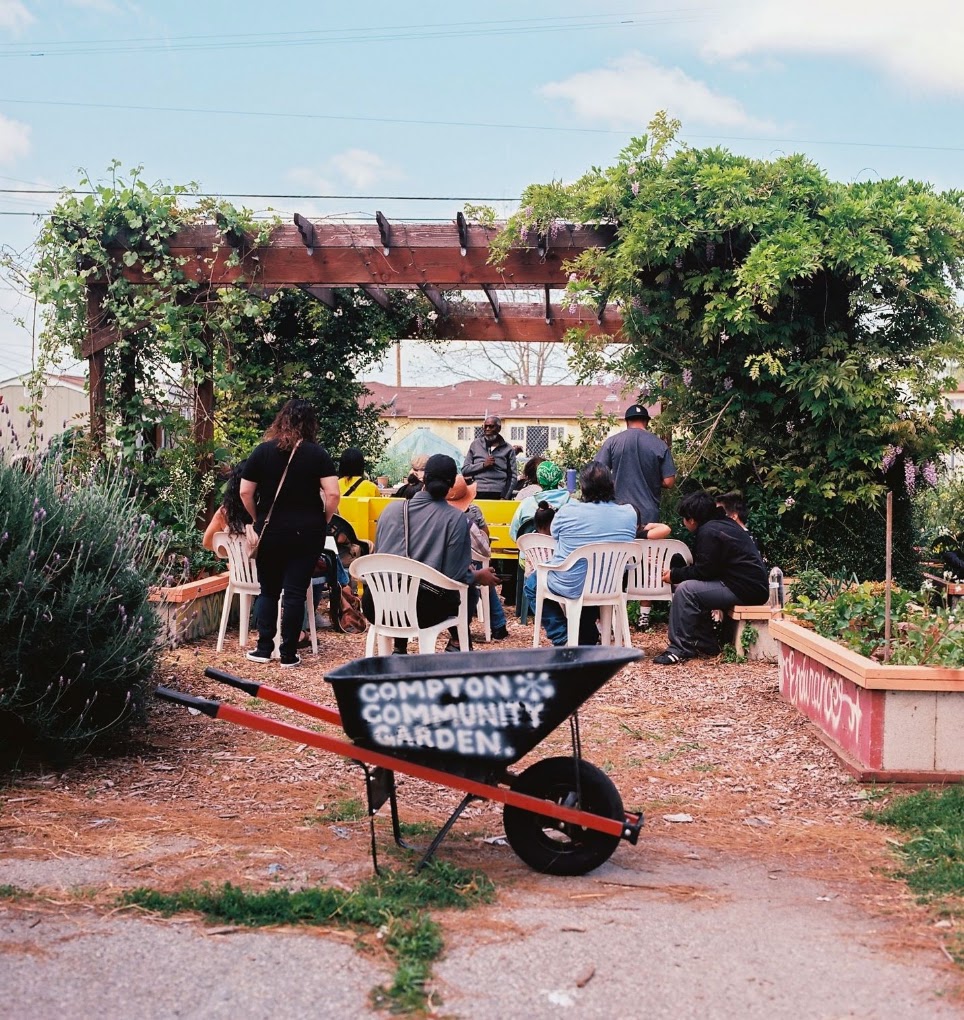
I don’t think what happened in our little missional community was a fluke, and I don’t think it’s just a Midwest, small-church kind of phenomenon either. A pastor named Deb Walkemeyer saw the same pattern play out on a much bigger stage. In 2013, as the final project for her doctorate, Deb partnered with Bob Combs of Metro Community Development Corporation to take over a vacant lot on Long Beach Boulevard in Compton, a stretch of road better known at the time for violence than vegetables, and turn it into what’s now called the Compton Community Garden.
A 2015 documentary called Can You Dig This, produced by John Legend, opens with a skeptical young woman asking how you could possibly have a garden in a place full of killers, prostitutes, and gang members. It’s a fair question. But that’s exactly who started showing up.
Women coming out of street life and men trying to leave their gangs behind began spending time at the garden together with the Christians who had committed to being there too. Everybody’s hands got equally dirty doing it. Some of the volunteers who’d been gardening there for years began teaching newer folks how to build raised beds, speak in public, and even start small garden-based businesses of their own. Slowly, gardeners started leaving gang life behind.
What strikes me about Compton is the same thing that struck me about our compost pile, just turned up several notches. Nobody at that garden was on one side of a serving table and nobody was on the other. A gang member pulling weeds next to a pastor next to a woman rebuilding her life after years on the street were, for that hour, just gardeners. The soil didn’t care about anybody’s record. It just needed hands.
That’s really what Tend, an initiative of Plant With Purpose, exists to help with. It’s not that we’re against serving; the Jesus we serve still calls us to care for the least of these. But we also believe our neighborhoods need groups who are willing to do something alongside the people next door, not just for them. Earthcare Activities are some of the simplest, most level, most disarming ways we’ve found to do exactly that. If you’d like a simple way to try something like this in your own neighborhood, Tend can help you get started.
FAQ
What is a missional community? A missional community is a group of Christians who practice their faith together in everyday life while joining what God is already doing in their neighborhood. In our experience, thriving missional communities share three things: spiritual leadership, predictable rhythms, and a genuine missional purpose.
Isn’t serving people in need still a valid and important calling? Absolutely. Jesus modeled serving those in need, and groups like Carol and Wayne’s are living out real, faithful obedience. The point isn’t to replace service with something else. It’s to notice that when we serve, it’s important to find or create spaces where our neighbors can serve and give and lead alongside us, not only receive from us.
What if my neighbors aren’t interested in gardening or creation care? You don’t need everyone on the block to be an outdoor enthusiast. Creation care projects tend to work as an on-ramp precisely because they don’t require any prior faith commitment or expertise, just a willingness to show up and get your hands dirty. Start with whoever’s curious and see what grows from doing something together.
How is this different from a regular small group or Bible study? A Bible study is a wonderful and important rhythm that Tend incorporates, but it’s specifically for people who already want to talk about the Bible. A shared Earthcare Activity, like composting or a neighborhood cleanup, creates a reason for people who wouldn’t normally walk into a Bible study to show up anyway, and the conversations about faith tend to follow naturally once the walls come down.
Do I need any special training or experience to lead something like this? No. Wayne certainly didn’t feel ready, and he ended up leading one of the most fruitful groups in our church. What matters most is a willingness to start small, invite a few neighbors into something ordinary, and pay attention to what God does through the practice.