A neighborhood composting project built relationships, one bucket at a time, until I found shredded plastic gift cards mixed into a finished batch. That small discovery turned into a picture of how much microplastic is working its way into soil everywhere and of the kingdom coming to fix it.
There Is Plastic In My Garden
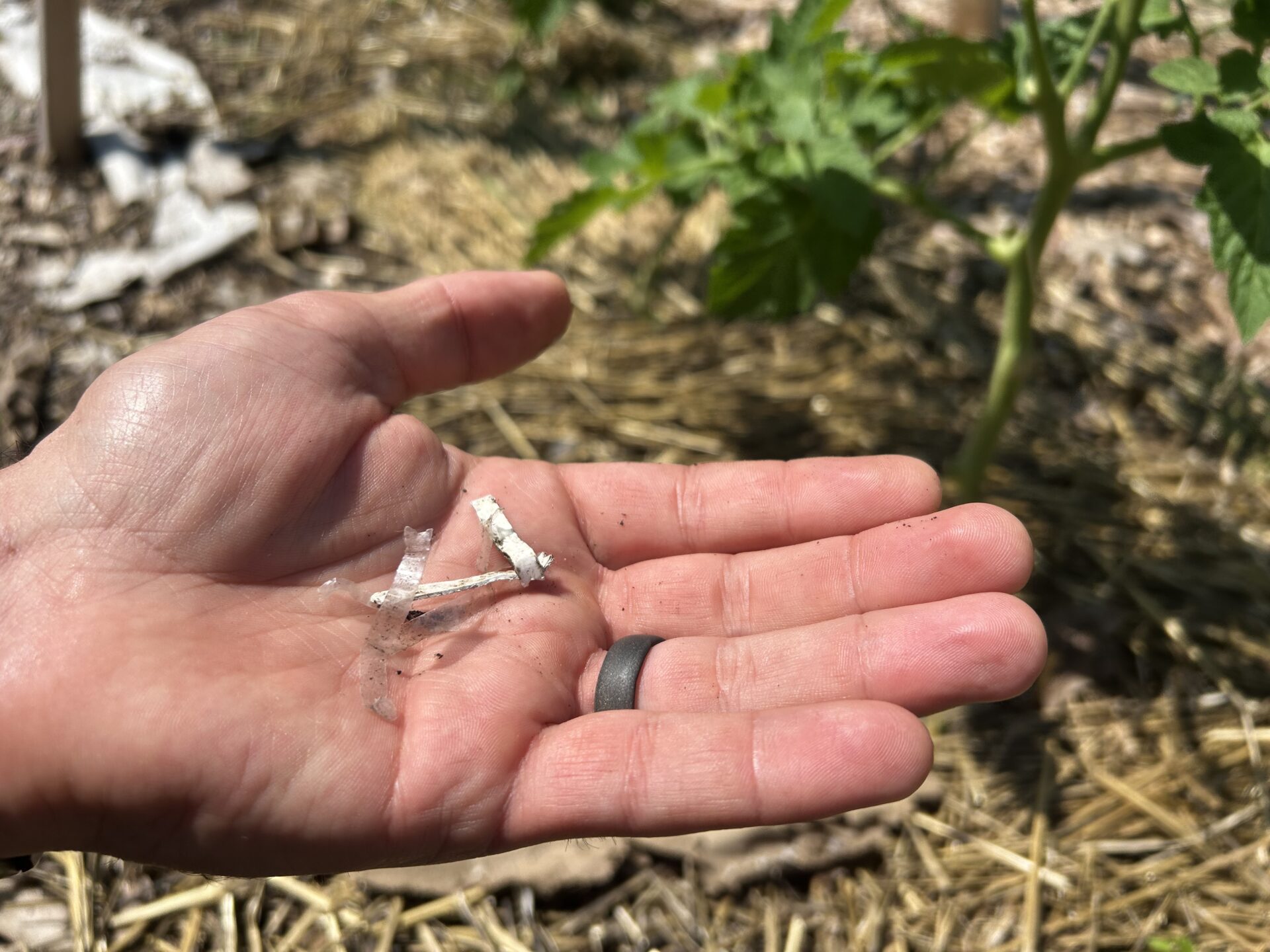
Last fall I was spreading a fresh batch of compost onto my garden beds when I noticed a thin shred of clear plastic sitting in the dirt, about an inch long and a few millimeters wide. I picked it out, put it in my pocket, and figured it was a one off. Then I found another piece, thicker this time, looking a lot like a shredded gift card.
I stepped back and saw they were everywhere, spread through the whole pile. Not only that, I had just spread them all over the beds I was about to plant vegetables in. Plastic confetti, now a permanent part of my garden.
To explain how it got there, I have to back up to how this whole composting project started in the first place.
Why We Started Composting With Neighbors
The goal was never just the compost. We also wanted to get to know our neighbors. So we walked the neighborhood and asked people if they would save their food scraps for us in five gallon buckets. Every single neighbor said yes. All of them. I still think about that, how easy it was to get a whole block of strangers to hand us their garbage once a week.
The idea was simple. We wanted to join God’s mission with our neighbors instead of doing something for them. Those two things sound close but they are not the same. One is you fixing somebody’s problem. The other is you showing up together, week after week, until you are not strangers anymore. Compost buckets turned out to be a weirdly good way to do the second one.
So every Saturday morning we walked the block, knocked on doors, and hauled buckets back to the pile. Some of those buckets are exactly what you would expect from a week’s worth of food scraps sitting at room temperature. You crack the lid and it just slops out, along with a waft of steam that burns your nostrils and forces you to question your choices.
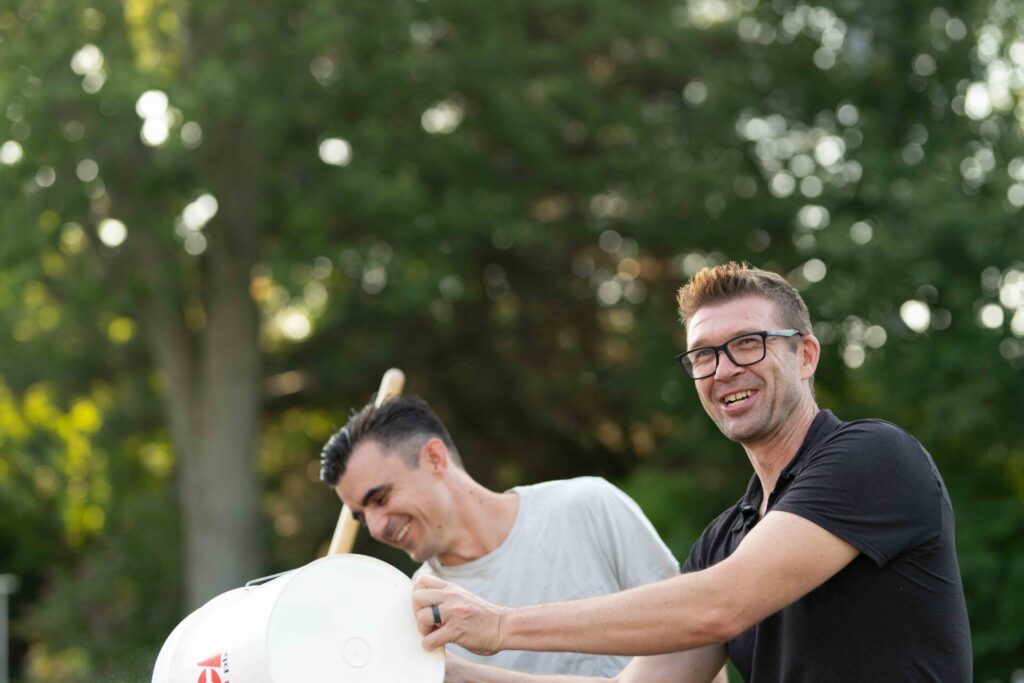
Those buckets of food are what we composters call “greens,” nitrogen rich material like fruit and vegetable scraps that attract useful bacteria to the pile. But greens need to be balanced with “browns,” carbon rich material like woodchips and dry leaves that attract more fungus to the pile… and cover the slop so our nostrils can recover. The problem is, it’s hard to find the amount of browns that we need to balance all the greens.
The Woman With the Loaf of Bread
Well, somewhere along the way, one of our neighbors asked if she could throw shredded paper in with her scraps. We said yes immediately.
That neighbor was an older woman who lived alone. We knew her bucket before we even opened it, because from that point on it was full to the brim with paper shreds every single week without fail. And every single week, buried underneath all that paper, there was a random loaf of bread. It was as if she bought an extra loaf at the store just so she could say it was not only shredded paper in there.
One day, when we picked up her weightless bucket of paper shreds and bread, she told us we were the only people she talked to all week. Her kids live far away. So this thirty second exchange on her porch, handing off a bucket of shredded paper and an untouched loaf of bread, was genuinely the most interactive part of somebody’s week.
I just think that is really cool. And I would bet she could not care less about composting.
Putting the Pieces Together
The compost takes a few months to finish. When it is ready, we offer it back to whoever contributed. Almost nobody ever wants it, so it ends up spread on our own gardens, which is how I found myself standing in my garden last fall with a pocket full of plastic and a question I could not shake. Where did this come from?
And then it clicked. You know that little plastic window in envelopes you get with bills and junk mail? She had been shredding that kind of mail right along with her paper, gift cards and all, almost like grating cheese into a taco, but with plastic. I am going to go ahead and assume she had no idea it would not break down.
There is no version of this where I pick every shred of plastic out of a finished compost pile by hand. On the other hand, I was not about to throw away months of good compost either. What, so it could all just go in the landfill anyway?
So I spread it. Now, every time I work in my garden, if I look closely, I can find a piece of plastic staring up at me from the dirt. My first response is to think of her. I shake my head and remember she lives alone and has probably never composted before. We just keep showing up and she loves having a person to talk to. The next thing I do is think about how tiny my garden is, and yet how clear a window it gives me into the state of the whole world.
A Tiny Garden, A Massive Problem
Agricultural soils around the world are now estimated to hold roughly twenty three times more microplastic than the ocean does. Somewhere between ten and forty million tons of microplastic gets released into the environment globally every single year. So this is not just one neighbor’s bucket. It is in the ground that grows our food, all the time, everywhere. And it is never going to compost. Plastics just keep getting smaller, eventually small enough to work their way into our water, our air, and even our blood. The Earth will never break it down on its own.
Jesus talked about wheat and weeds growing up together in the same field, and I think about that a lot standing in that garden. I cannot even stay on top of the literal weeds, let alone pull every bad thing out of this world with my own two hands. Not the plastic in my soil. Not the sin in my own chest. Not the war or the famine or the slavery or the starvation that fills up the news every single day. I cannot fix any of that. None of us can, no matter how hard we try.
The Kingdom That Fixes What We Cannot
But I believe there is a kingdom coming where Jesus takes creation apart atom by atom and puts it back together the way it was supposed to be from the start. No nanoplastics. No oil spills. No toxins in the air or the water. But also no war, no famine, no slavery, no loneliness. No sin. Everything made whole.
On this side of eternity, composting is a great way to join God in that renewing work today. If you want a simple way to start something like this in your own neighborhood, check out the Compost Challenge activity guide here.
When I find a piece of plastic in the garden now, I do not just see trash. I see a small reminder that things do not always get better on their own, and that sometimes when we try to do something good we make it worse without meaning to. But things are not staying this way forever. There is a Savior of the whole universe who is coming. So come, Lord Jesus, come. Make this all new.
FAQ
Why compost with your neighbors instead of just doing it yourself? Because the compost was never really the point. Knocking on doors every week gives you an actual reason to know the people around you, which is a lot harder to fake your way into otherwise.
What do you do with the finished compost? We offer it first to whoever contributed scraps. Almost nobody ever wants it, so it usually ends up on our own gardens.
How long does compost like this take to finish? A few months, depending on the weather and how well you are balancing greens and browns.
Can you compost shredded paper? Yes. It is a solid brown material and helps balance out wetter, smellier greens like food scraps.
Can you compost shredded plastic, like gift cards? No. Plastic does not break down, and once it is shredded into confetti it is nearly impossible to sort out of a finished pile. If neighbors are shredding paper for you, it is worth telling them clearly to keep plastic out.
How much microplastic is really in our soil and water? More than you would think. Agricultural soils are estimated to hold roughly twenty three times more microplastic than the ocean, and ten to forty million tons enter the environment globally every year.
How do I start something like this in my own neighborhood? Start with a few houses. Ask them to save scraps, pick one consistent day to collect, and let the relationships grow from there. The Compost Challenge activity guide at tendlife.org/preview walks you through it.