The Bible didn’t fall out of the sky. It grew out of hills and rivers and harvests, out of a people who could tell you the weather by the color of the sky over a particular valley. If we strip that away and keep only the “spiritual” parts, we don’t end up with a purer Bible. We end up with a thinner one. This post is about what it looks like to let the Bible take root in our lives.
What happens when we remove place from Scripture
In the 1930s, farmers plowed through millions of acres of grass that had held the soil in place for centuries.
They had a slogan for what they were doing to the land: “rain follows the plow.” They believed breaking up the deep-rooted prairie sod was part of their biblical mandate. They ignored all the other biblical mandates having to do with caring for the land through rest and sabbath. It’s not that they didn’t care about the land. They just didn’t know. They thought they could dismiss that part, keep plowing soil, and God would just send more rain to bless it.
But the opposite happened. The drought came, the topsoil blew away by the ton, and towns across the plains vanished into it, what’s still the worst man-made ecological disaster in U.S. history.
That’s what happens when Christians read the Bible without paying attention to its connection to the Earth.
The Bible wasn’t written on generative AI. It was written by shepherds and farmers and fishermen and wanderers in the wilderness, people who knew the rain patterns, who counted their wealth in flocks and fig trees, who understood a psalm about a deer panting for water because they had actually watched deer pant for water.
Old Testament scholar Ellen Davis has lamented that theologians have paid close attention to Scripture’s spiritual meaning while skipping over its material one, which comes from the water and seasons and land it’s soaked in. Cherokee Christian theologian Randy Woodley makes a similar case from a different tradition, arguing that Western Christianity has too often treated land as scenery instead of relationship. Woodley sees the biblical vision of shalom as the reconciliation between people, land, and Creator.
When we edit the Earth, the seasons, and the soil out of our reading, when we file the creation parts of the Bible under “ancient context, not applicable today,” we end up with a thinner Bible and a thinner faith to match. Our reading of the Bible doesn’t stay theoretical. It shows up in how we treat our God, our Earth, and our neighbor.
The Bible was inspired in an actual place
The Bible is the inspired Word of God. That doesn’t mean the words literally dropped out of the sky. It means the Spirit moved in real people, living in a real place at a real time, and out of that particular context grew God’s Word. Moses wasn’t inspired in the abstract. He was inspired as he walked up and down Mount Sinai, leading hungry people through a desert he had walked for years as a shepherd.
The prophets and the psalmists were inspired the same way. Yes, they entered the tabernacle and later the temple and received prophetic words from on high. But they also stood in actual fields, mountaintops, valleys, and rivers and read the Earth for a word from the Almighty. When the ground was cracked and the cisterns were dry, that wasn’t just weather to them, it was Israel’s unfaithfulness made visible, and they said so. When the crops came in heavy and the hills were green, that wasn’t just a good season, it was God’s mercy made visible, and the trees themselves seemed to be in on it, clapping their hands. A desolated field and an abundant one were both signs that helped them interpret what God was doing in the world, and prophecy and praise grew in part out of paying close attention to what God was doing in creation.
We honor the Bible’s inspiration by taking seriously that God chose a place, and a people rooted in that place, to say what needed saying. Respecting the Bible’s inspiration means respecting its address.
The Bible asks to be embodied
Here’s an image I keep coming back to. Strawberry plants don’t just spread by seed. They send out runners, thin green lines that stretch from the mother plant, touch down in new soil, and root again. The new plant isn’t really a new plant. It’s connected all the way back, and it’s also fully rooted right where it landed.
The strawberry metaphor isn’t a perfect one, but it helps us understand a mystery of the Bible. It transcends time because its truth speaks to all contexts and all ages. But it is also genuinely rooted in the place and time it was written while also being living and active today. As 21st century readers, we explore the Bible faithfully when we get curious about how it was shaped by its historical and geographical context. But it was never meant to stay there. It sends out a runner across centuries and lands in our soil, in our backyards and church parking lots and neighborhood watersheds, asking to root again, not as an idea floating free of dirt, but as something lived by actual people in an actual place.
Are we just reading Scripture, or is it actually changing our lives and the life of our churches? Jesus said that it’s not enough to simply hear His words. The Church is called to become the Word embodied by putting them into practice. Disciples are people who listen to the voice of Jesus in Scripture and work with the Spirit to make changes in their lives. Maybe it’s choosing to forgive. Maybe it’s giving a possession away. Maybe it’s picking up trash at a park with our Tend group so that creation can more fully reflect the beauty God intended for it.
Scripture doesn’t just ask to be known. It asks to be lived out, in a body, in a community, in a place you could put on a map.
The Word changes the world
Hebrews says the Word of God is alive and active. From the swirling waters of Genesis 1 to today, we believe the Word of God actually changes the world.
Plant With Purpose works with farming communities across nine countries, and a few years back they formalized what they call the Community Designed Restoration model, where local farmers, not outside experts, lead the redesign of their own land. The model doesn’t start from agronomy. It starts from theology. The approach explicitly encourages a biblical perspective on the intrinsic value of creation as the foundation for environmental restoration, and the organization names stewardship of the Earth as a core value alongside stewardship of relationships and resources.
These farmers learn what the Bible says: creation is good and humans are made in God’s image to tend it, to partner with God in extending edenic flourishing to the rest of creation.
Farmers take that seriously. With encouragement from their church and community, and training from Plant With Purpose local leadership, they start creating contour barriers on eroded, steep slopes and begin planting trees and rotating crops.
The biblical call to tend creation isn’t just a cute analogy. In Haiti, farmers told staff the flooding and mudslides that used to kill people in their region stopped once they reforested the steep ground above their homes. A family in the Democratic Republic of Congo went from feeding their kids once a day to twice a day after learning agroforestry rooted in that same conviction. The Word of God, alive in people, literally moves mountains, one contour barrier at a time, and lifts families out of poverty in the process.
Tend: letting the Bible have its way with us
This is what Tend exists for. Not just to teach Christians more biblical knowledge, but also to give it room to do what it’s always done: change the world in an actual place and with actual people.
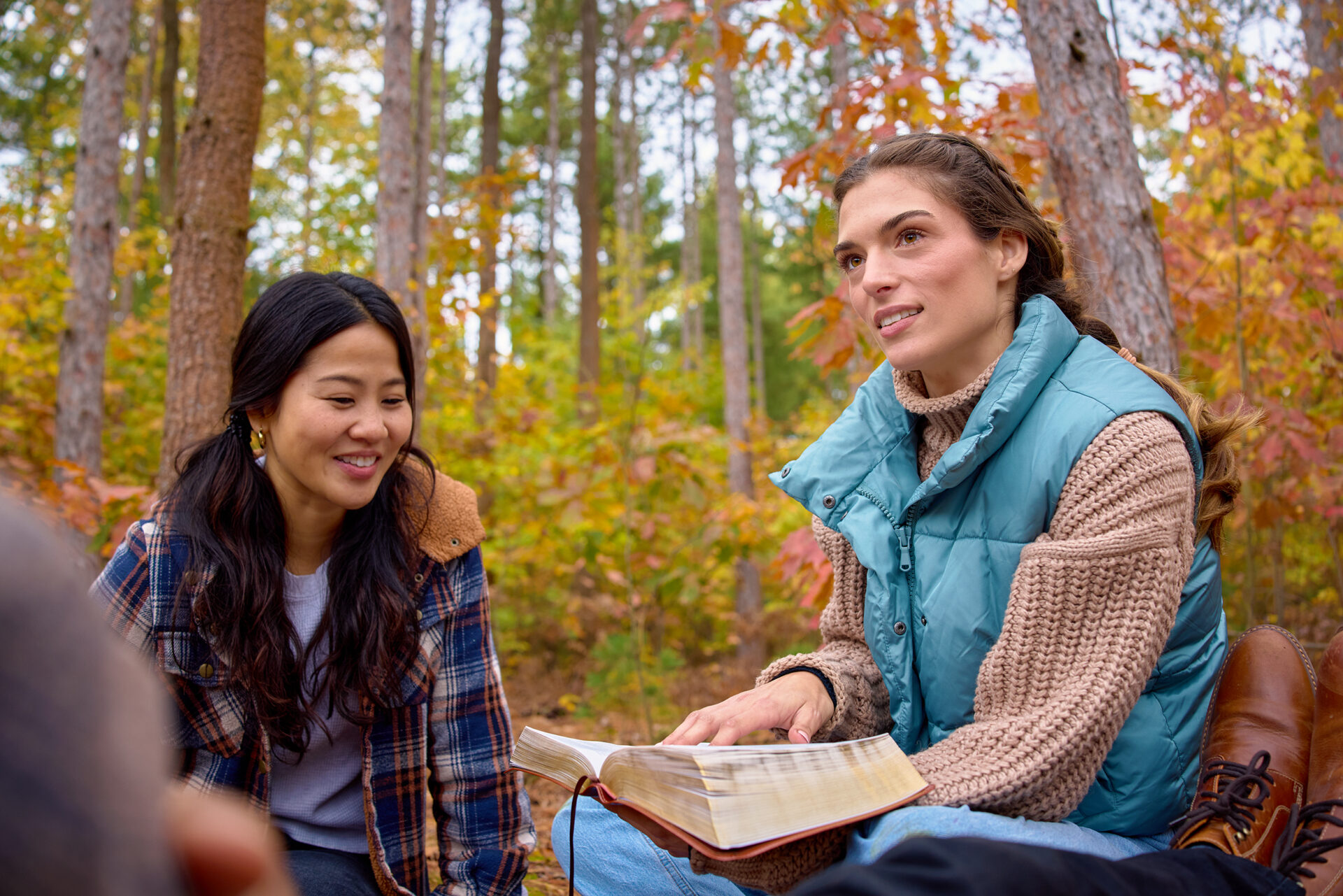
Tend groups read Scripture in community and let it speak, not as a text to analyze but as the Word that’s still alive and still active, still asking to change us, our neighbors, and the ground under our feet.
If you have been circling the same few Bible study formats and it’s starting to feel like information transfer instead of transformation, that’s usually a sign the Word needs a way to root into your community. Tend can help you build that. Create a free account and see what it looks like when the story roots into your place too.
FAQ
Isn’t this just environmentalism dressed up as Christianity?
No. The point isn’t to make creation care the center of the gospel. The point is to let the whole Bible speak. From Genesis to Revelation, Scripture consistently presents the material world as God’s good creation, entrusted to human care and destined for restoration in Christ. Caring for creation isn’t a replacement for evangelism or discipleship—it’s one expression of faithful discipleship.
Are you saying Christians have misunderstood the Bible for 2,000 years?
Not at all. Christians throughout history have recognized that God speaks through both Scripture and creation. What’s different today is that many modern Christians live farther removed from the natural world than almost any generation before us. Recovering the Bible’s rootedness in place isn’t inventing something new, it’s rediscovering something that’s been there all along.
Do I need to become a gardener or farmer to understand the Bible better?
No. You don’t have to grow your own food or own acreage. But spending intentional time outdoors, noticing seasons, paying attention to local wildlife, planting something, or simply walking your neighborhood with Scripture in mind can help you experience many biblical themes in fresh ways. The goal isn’t agriculture. The goal is attentiveness.
How is Tend different from a traditional Bible study?
Tend doesn’t replace studying Scripture carefully; it builds on it. Along with reading and discussing the Bible, Tend groups put Scripture into practice through simple acts of service, creation care, hospitality, and spiritual formation. The goal is not just to know more about God’s Word, but also to let God’s Word reshape the people and places where we live.