Christians longing to experience God in a deeper way are getting outdoors and actually walking with God together.
There is a shift happening, not away from Scripture or community but toward a more embodied way of living faith. People are discovering that something changes when they step outside, slow down, and begin to move through a place with attention. What once felt abstract starts to become tangible. What once felt distant starts to feel near.
For pastors and Christian leaders, this is not a trend to manage. It is an invitation to recover something that has been there all along.
Walking with God in an Indoor, Screen-Shaped World
Most of our lives now take place indoors. We move from one enclosed space to another, often guided more by schedules than by seasons. Even our moments of rest are filled with screens. We scroll, watch, and consume at a constant pace.
This way of living shapes us. It shortens our attention. It pulls us toward speed and efficiency. It subtly trains us to experience the world as information instead of as a place we belong to.
Over time, this begins to affect our faith. We can know more about God while experiencing less of God. We can talk about discipleship while feeling disconnected from the places where we actually live.
Walking with God offers a welcomed interruption.
It brings us back into the physical world that God made and sustains. It reconnects us with the ground beneath our feet, the air around us, and the people who share our spaces. It reminds us that faith is not only something we think about. It is something we live, with our whole selves, in real places.
Walking with God Has Always Been Part of the Story
Walking with God is not a new idea. It is woven throughout Scripture from beginning to end.
In Genesis, God walks in the garden with Adam and Eve. This is the first picture of relationship. God is present with people in a place, moving together in closeness and trust. Enoch is later described simply as someone who walked with God. His life is defined not by what he built or accomplished, but by how he lived in relationship.
Jesus himself walked constantly. He moved from town to town with his disciples. Many of his most important conversations happened along the road. People learned by walking with him, listening, asking questions, and observing.
Even after the resurrection, Jesus joined two disciples on a road. As they walked together, their understanding began to open.
Walking is not a technique in Scripture. It is a way of participating in life with God.
Creation Care as a Calling We Often Rush
For many churches, creation care can feel complicated. It can feel like something we need to organize, solve, or fix. We often approach it as an external problem that requires immediate action.
There is a good desire underneath this. We want to care for what God has made. We want to respond to brokenness in the world.
But we often start too fast.
We move quickly toward solutions without first learning how to see. We treat creation as something outside of us instead of recognizing that we are part of it. We step in as problem-solvers rather than as participants.
Scripture offers a different starting point.
In Genesis, humans are formed from the soil and placed within a garden. We are not separate from creation. We belong to it. Our calling to tend the Earth flows from relationship rather than urgency.
When we forget this, creation care becomes heavy. It feels like pressure. It feels like one more thing to fix.
But when we remember that we are part of creation, the posture changes. We do not enter as outsiders. We are being welcomed back into a space we belong to but have grown unfamiliar with.
And that kind of return cannot be rushed.
Walking with God as a Way of Relearning Creation
If we are going to learn to see the world differently, we need practices that slow us down.
Walking with God is one of those practices.
When we walk, we begin to re-enter creation at a human pace. We notice what we have overlooked. We begin to learn the language of a place. The way light shifts throughout the day. The sounds that mark morning and evening. The small changes that signal a new season.
These are not just observations. They are ways of learning to see the God of creation through creation itself.
Scripture tells us that creation reveals something of God. But this kind of seeing cannot happen quickly. It requires time, repetition, and attention.
Walking gives us that.
It helps us move from being observers to participants. We are not standing at a distance analyzing the world. We are moving through it, within it, as people who belong to it.
Walking with God Slows Us Down Enough to Notice Ourselves and Others
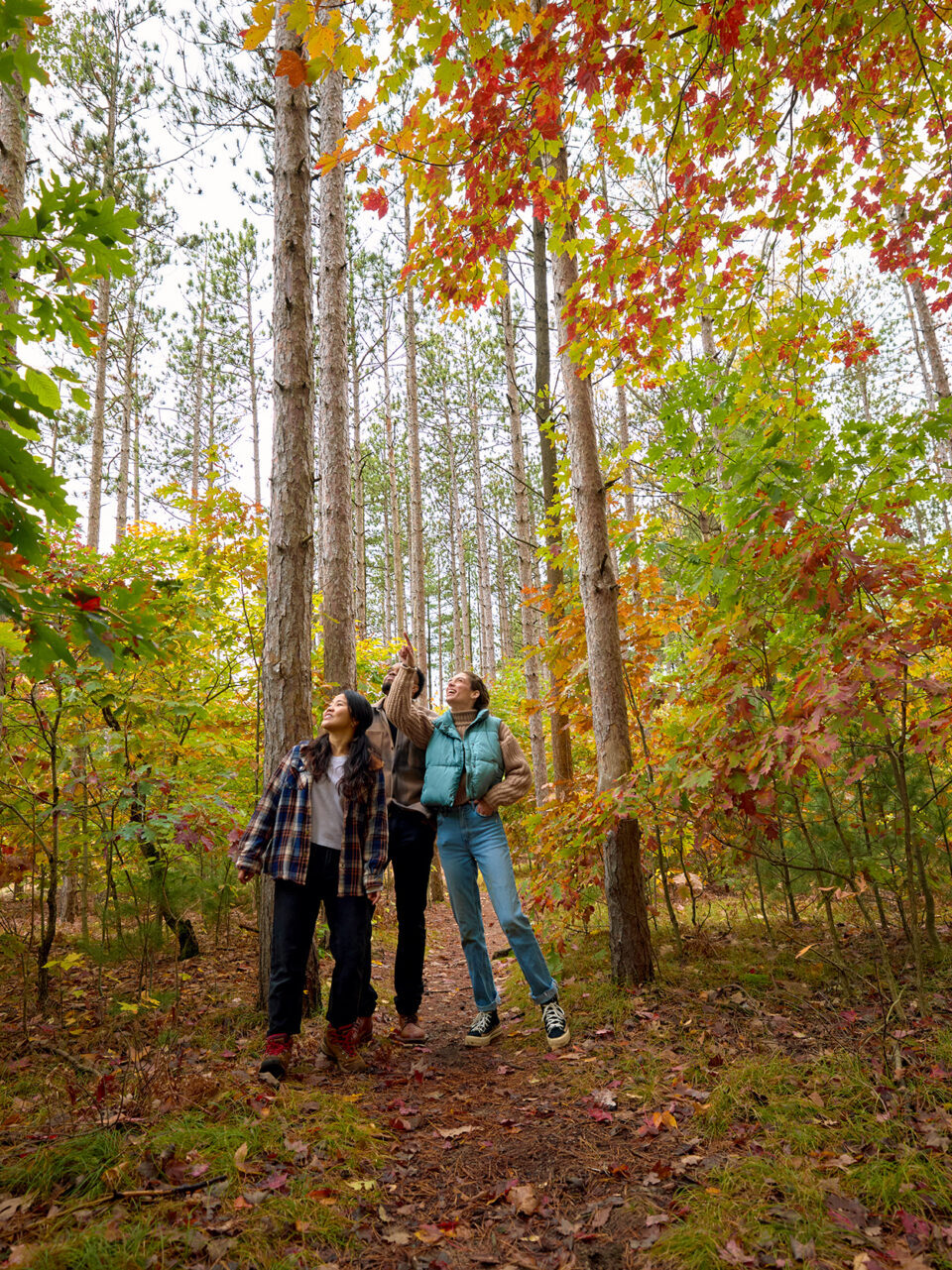
One of the first changes people experience when they begin walking with God is a shift in pace.
Walking creates space. It slows our bodies, which in turn slows our minds. Thoughts that were buried begin to surface. Emotions that were ignored begin to come into view.
This is not a distraction from faith. It is part of it.
At the same time, our awareness of others grows. We notice neighbors. We recognize familiar faces. We begin to see people not as interruptions, but as part of the place we share.
This kind of attention builds connection. It opens space for conversation. It creates opportunities for relationship that do not need to be forced.
Walking with God forms people who are present, both to God and to others.
Walking with God Helps Us Recognize God’s Character and Presence in Place
As attention deepens, people begin to see more than just details. They begin to recognize meaning.
Creation reflects God’s character. Beauty, order, creativity, and care are visible in the world around us. When we slow down enough to notice, these qualities begin to stand out.
We also begin to sense that God is present in the places we walk. Not because we have made those places sacred, but because we are learning to see what has always been true.
This shifts how we understand our neighborhoods. They are not empty spaces waiting for God to arrive. They are places where God is already at work.
Walking with God helps people recognize that presence.
Walking with God Is Participating with Jesus in the Restoration of All Things
As people grow in awareness and affection, their role begins to change.
They start to see opportunities for care: a piece of trash on the ground, a neighbor who needs a conversation, or a shared space that could be tended.
These actions are simple, but they matter. They are ways of participating with Jesus in the restoration of all things.
Through Tend, this participation is not framed as a project to complete. It is a way of life to enter into. Earthcare Activities like Sacred Hikes help people practice this in ways that feel natural and repeatable.
Walking with God becomes a way of joining what God is already doing.
Walking with God Builds Affection for a Place
Over time, repeated walks create familiarity. Familiarity grows into affection.
A place that once felt ordinary begins to feel known. People notice when things change. They recognize patterns. They begin to care.
This affection is not something we force. It grows from attention.
And as affection grows, people begin to take responsibility in a different way. Not out of pressure, but out of love. They want to see their place flourish.
Walking with God helps people rediscover that their place matters. It is not just where they live. It is where they belong.
How to Practice Walking with God in Different Contexts
Walking with God is simple, but it can take many forms depending on context.
In a neighborhood, a group might walk a familiar route together, pausing at certain points to notice and reflect. Children can be invited to share what they see, often bringing fresh perspective.
In a city park, the group might include a few intentional stops with short Scripture readings or shared observations.
On a trail, the walk may include longer stretches of silence, allowing space for reflection and listening.
For families, the practice can be interactive. Children might look for specific colors, sounds, or textures. Their curiosity can shape the experience for everyone.
For those with limited mobility, walking with God can take place in a small, accessible area. A garden, courtyard, or short path can become a meaningful space for attention and reflection.
The goal is not distance or difficulty. The goal is attention.
Walk. Notice. Listen. Share.
Walking with God Through Tend and Sacred Hikes
This is where Tend becomes especially helpful.
Tend is an initiative of Plant With Purpose that equips churches to practice faith in everyday life through simple rhythms of gathering, Scripture, and shared Earthcare Activities. Tend is a free 10-week experience for groups designed to help people live their faith in ways that are relational, grounded, and sustainable.
One of the most accessible of these Earthcare Activities is the Sacred Hike.
A Sacred Hike is a simple, guided or informal walk through a local place. It includes intentional pauses to notice, listen, and reflect. It does not require special knowledge or preparation. It simply creates space for people to walk with God together.
Groups might walk through a neighborhood, a park, or a nearby trail. Along the way, they slow down. They pay attention to what they see and hear. They may read a short passage of Scripture or share what they are noticing.
Over time, something begins to shift. People become more aware of their surroundings. They begin to recognize patterns and rhythms. And slowly, they start to realize that God has already been present in these places all along.
A Simple Invitation to Begin Walking with God
If you are looking for a way to help people experience faith more deeply, walking with God is a simple place to begin.
Through Tend, an initiative of Plant With Purpose, practices like the Sacred Hike offer a clear and repeatable way to help people engage their faith in everyday life. They create space for people to reconnect with God, their neighbors, and the places they inhabit.
You do not need to build something complex. You can start with a simple walk, a few people, and a willingness to pay attention.
If you want a practical way to guide that experience, explore the Sacred Hike Earthcare Activity through Tend. It is a free, gentle, and accessible way to help people rediscover what it means to walk with God, one step at a time.