

Evangelism has become a loaded word, and for a lot of us, that word alone can shut down the conversation before it starts. But when we get back to what evangelism actually means (good news) it opens up a much simpler and more natural way to connect with the people next door. This post walks through why evangelism feels so hard, what got mixed up along the way, and three practical shifts that can help you and your discipleship group build real relationships with your neighbors, the kind where faith comes up because it is real, not because you are making a pitch.
Evangelism Is a Dirty Word, and I Get Why
Let’s just name it. Evangelism has picked up a lot of baggage. Part of that is political. The word “evangelical” has become partially tied to a particular voting bloc. (I don’t want to spend this post untangling that knot.)
But even setting politics aside for a minute, the word evangelism has started to bring pressure all on its own. It conjures up images of arguments, pamphlets, and awkward conversations where you can feel the other person trying to find the exit. Nobody wants to be that person, and nobody wants to be on the receiving end of that either.
Here’s what helps me. Evangelism comes from the Greek word euangelion, which simply means “good news.” That’s it. That’s the whole idea. We are not talking about a debate tactic or a sales technique. We are talking about the news that Jesus rose from the dead. This news changes our lives, our neighbors’ lives, and honestly the life of the whole created world. The New Testament declares that Christ is king of the universe, actively reconciling all things to himself. When Jesus rose, he broke the grip of sin, death, and decay, and brought us into his kingdom as people sent to declare and demonstrate that good news everywhere we go, including our own street.
So if evangelism is simply sharing good news, why does it feel so hard?
Where We Got It Twisted
I think a lot of our discomfort comes from an old mix-up called dualism. Dualism is the idea that God cares more about “spiritual things” than “physical things”, souls than bodies, heaven than Earth, or knowledge more than love. It started a long time ago, when Christians began treating faith as though it were mainly about having the right intellectual answers instead of participating in the life of the risen Jesus.
To be honest, it’s a pretty convenient mistake. It kind of protects us from the part of following Jesus that involves sacrifice and suffering (the cross) but it can block us from encountering some of the sweetest gifts of faith. When that dualistic mindset creeps into how we think about faith today, evangelism gets boiled down to a theoretical argument: We know something our neighbor doesn’t, and now our job is to convince them.
That framing can make people miserable. I’ve watched good, faithful Christians convince themselves they can’t share their faith because they’re not Billy Graham. They don’t have every verse memorized. They couldn’t defend the historicity of the resurrection in a courtroom. And they don’t want to feel like every human interaction is required to be a pushy sermon. So they either avoid the conversation altogether or go looking for more information to build an airtight case, because somewhere they picked up the idea that their job was to be a door-to-door salesperson for Jesus.
I want to be clear that apologetics matters. Knowing why we believe what we believe is a real gift, and some people are genuinely called to that kind of defense of the faith.
But apologetics is not the same thing as evangelism. Evangelism is not Toastmasters or Cutco Knives. It is something a Christ-centered community does together: a group of people who are actually living out the good news in word and action in a way that allows others to join in.
At the risk of being too prescriptive, here are three shifts for doing evangelism naturally, without things getting weird.
- Do Discipleship Together First
The first shift is to actually live the Christian life in community, not just believe the right things privately. Mission theologian Leslie Newbigin famously wrote the following:
How is it possible for the gospel to be credible, that people should come to believe that the power which has the last word in human affairs is represented by a man hanging on a cross? I am suggesting that the only answer, the only hermeneutic of the Gospel, is a congregation of men and women who believe it and live by it.
–Lesslie Newbigin, The Gospel in a Pluralistic Society, London: SPCK, 1989 (227)
In other words, when someone hears the world-shaking good news about Jesus, their next question is whether that good news is transforming an actual group of people.
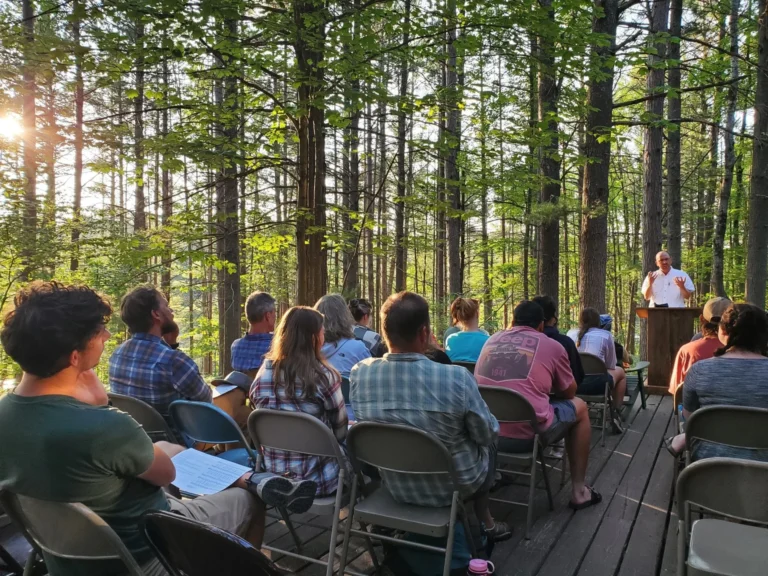
That means before we can talk about reaching our neighbors, we need a group of people who are practicing this Jesus life together. Yes, on Sunday morning singing and preaching. But also in ways that touch the rest of our week through shared meals, shared prayer, shared service… the ordinary, Jesus-shaped rhythms that make faith visible instead of merely theoretical.
This is the heart behind a Tend group: a small community that anchors faith in shared practices rather than abstract beliefs.
- Create Space, Not a Pitch
The second shift is for that group to step into new spaces and begin engaging practices that help them build authentic friendships with people who don’t identify as Christian, separate from your regular gatherings. So often our default move is to invite people to a Christian event, service, or festival and hope something happens once they arrive. Sometimes that works. But it puts all the pressure on our neighbor to cross into our world first.
A more natural posture is to go the other direction: join your neighbor, partner with them, and become a companion in their life on their turf.
Think about Philip and the Ethiopian official in Acts 8. The Ethiopian is the one asking questions. He’s the one who invites Philip into the chariot. Philip doesn’t summon him to a religious event. He steps into a space where he has been welcomed and joins a conversation that God has already begun.
This is where the New Testament idea of oikos becomes especially helpful. Oikos simply means “household,” but it refers to the network of relationships that naturally surrounds each of us: neighbors, coworkers, friends, and extended family. Missiologist Alex Absalom has helped many churches recover this way of thinking, encouraging Christians to look for “persons of peace” and notice spaces in which God is already creating openness rather than trying to manufacture opportunities. Instead of treating evangelism like approaching strangers with a presentation, we begin with the people and places God has already woven into our everyday lives.
If you’re unfamiliar with his work, Alex Absalom writes extensively about oikos, persons of peace, and joining what God is already doing through everyday relationships at https://www.dandelionresourcing.com/.
Some people worry that a truly mutual, equal-footing conversation can’t possibly lead anywhere—that we need to control the outcome if someone is ever going to come to faith. I’d push back gently on that. That worry usually reveals a view of evangelism that leaves the Holy Spirit out of the equation.
- Trust the Holy Spirit and Show Up
Which brings me to the third shift: trust that the Holy Spirit is already at work in your neighbor’s life, and always has been.
Let me say it as plainly as I can manage:
You don’t have to manufacture spiritual momentum in their life.
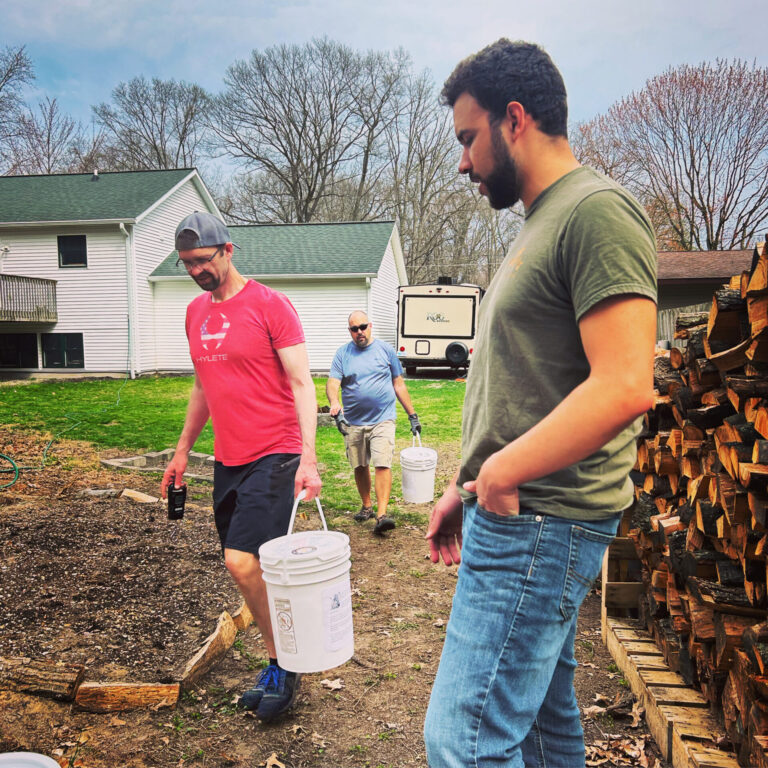
Your group’s job is simply to show up with neighbors, ask good questions, and actually listen. What do they love? What are they carrying? What brings them joy? What feels heavy right now? Encourage them. Celebrate them. Don’t be creepy.
Eventually they’ll mention something that’s important for them: something heavy or something that rings with purpose. If the Spirit prompts you, you can simply say, “Some of us get together to pray for others during the week… is it okay if we pray about this for you?” They’ll probably say yes, at which point… actually do it. Bring your neighbor’s situation to your Tend group and pray for them by name each time you meet. When you later mention to your neighbor that your community has been praying for them, it gently reveals that prayer is simply part of your shared life together.
Alex Absalom often teaches a simple progression for discerning spiritual openness. It begins with, “Can I pray for you?” As trust grows, it becomes, “Would it be okay if I prayed with you?” These questions are not meant to pressure someone. They simply give you options for how to bless people depending on where they are spiritually.
A prayer can be as simple as, “Jesus, thank you for this person. Thank you that you love them and that you are going to take care of them and their family in this situation. Bless them today. In Jesus’ name, amen.”
The point isn’t to get them to pray the sinner’s prayer. The point is to faithfully bless your neighbor and leave the outcome in God’s hands.
Over time, your neighbor may start asking about your group, or you may sense that an invitation is natural. Either way, this works best when it isn’t a solo project. As your relationship with your neighbor develops, make sure you are bringing others from your discipleship community into these friendships so your neighbor encounters an entire community living out the good news, not just one person with an opinion.
Start Practicing This With Your Group
If you want a practical, ready-made way to put this into action, this is exactly what our Tend kits are built for. They help small groups practice discipleship through shared meals, Scripture, prayer, and simple Earthcare Activities that naturally create opportunities to build friendships with neighbors so that everyone can experience the good news of Jesus.
Learn more and register to start a Tend group today!
Frequently Asked Questions
Isn’t it manipulative to be friends with someone hoping they will become a Christian?
Not if the friendship is genuine on its own terms. The goal is mutuality and presence, not a hidden agenda. You’re called to love and bless your neighbor regardless of the outcome, and if the relationship never leads to a spiritual conversation, it is still worth having.
What if I’m not naturally outgoing or “spiritual”?
This approach doesn’t require a big personality or years of theological training. It asks you to notice people, ask good questions, and pray. Those are learnable habits, and they’re much easier to practice as part of a community than on your own.
How is this different from just being a nice neighbor?
Being a good neighbor is exactly where we start. The difference between “just being a nice neighbor” and “practicing evangelism” is that you are practicing neighboring not on your own but as part of a community centered on Jesus. As you share meals, care for your neighborhood, and grow genuine relationships, people take steps towards Jesus naturally instead of it feeling forced.
What if my neighbor isn’t interested?
That’s okay. Jesus Himself taught His disciples that not everyone would be receptive. You aren’t responsible for the outcome. You’re responsible for showing up faithfully, loving your neighbor well, and trusting the Holy Spirit with everything else.