A guilt-ridden dinner table taught me something I didn’t expect: the difference between a landfill culture and a compost culture isn’t about being a better recycler. It’s about whether you believe in scarcity or abundance. This month’s Compost Challenge is a small, physical way to practice believing in God’s abundance.
The Toast I Used to Yell About
For years I stood over my kids’ plates like a food court manager. “You have to finish your toast.” “You have to finish your dinner.” I pretended I was doing it because I’m a nutrition zealot. But the truth is I was doing it because every uneaten bite felt like it was eroding something important to me. Scraping their plates into the trash felt like scraping away money, effort, and whatever thin moral high ground I had left as a parent who was trying to not waste things.
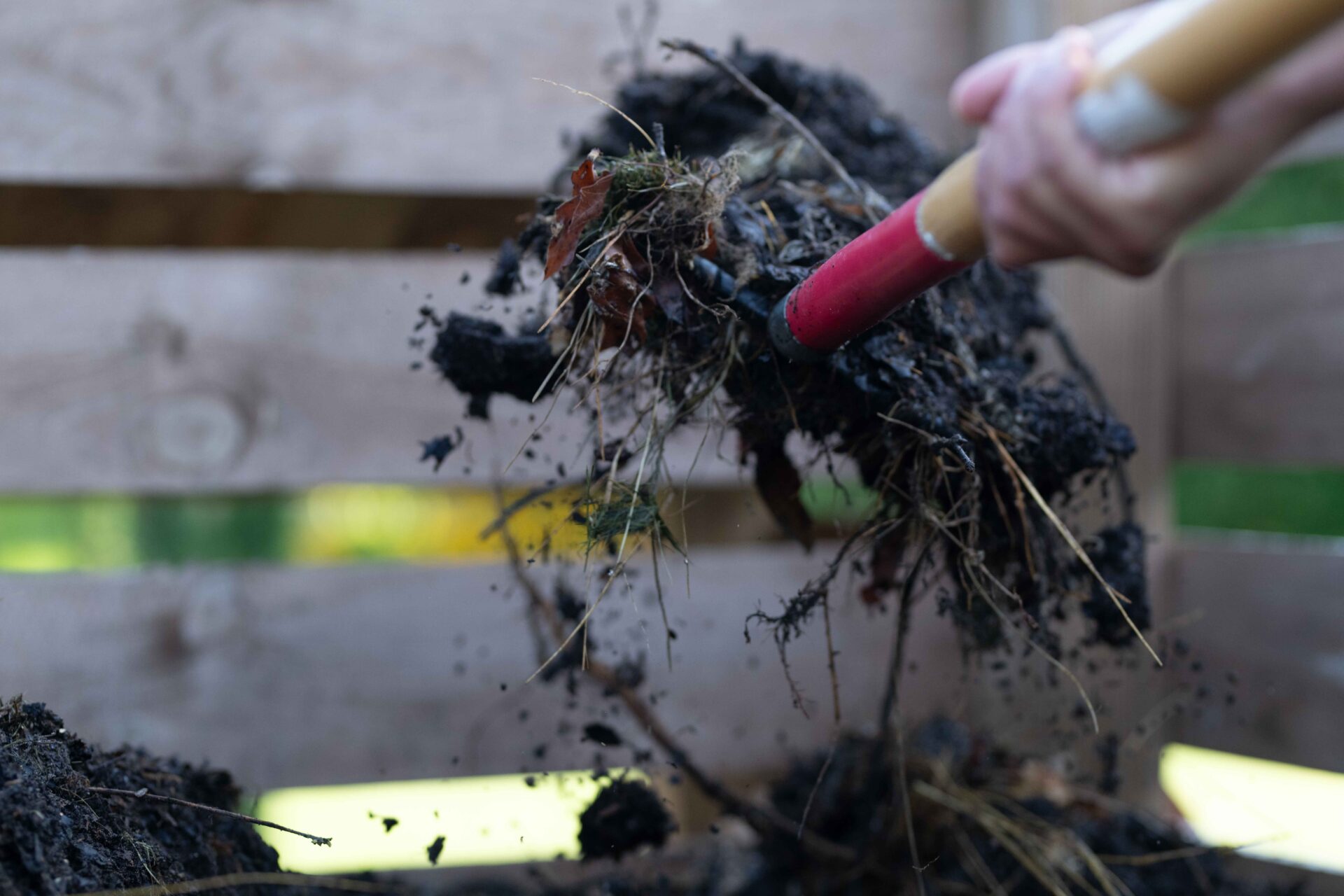
Then we started composting, and something changed. I stopped caring whether my kids finished their toast, or anything for that matter. Not because I gave up on manners, but because leftover toast had stopped becoming trash. Now it goes to our chickens. The chickens turn it into eggs, which we eat, and into manure, which we put into the compost pile, which becomes the soil that grows our vegetables, which we eat again. My kids’ leftover lunch is currently somewhere in my garden becoming a tomato. That is a weird sentence to be able to write, and it changed something in me that a hundred lectures about not wasting food never touched.
We Live in a Landfill Culture
“All things on Earth only exist in different stages of becoming garbage.”
— Jerry Seinfeld, The Tonight Show, 2015
We are living in a landfill culture. New things arrive at our door with ceremony and slowly, without us really noticing, become junk on their way to the curb. We do this with objects, and we do it with the rest of our lives too. We give up on relationships instead of tending them. We leave churches and jobs the moment they get hard, especially now that an exit is one email away. We are fluent in throwing things out and a lot less fluent in caring for what we already have.
It turns out we throw out an enormous amount that never had to be trash at all. According to EPA data, food waste alone makes up about 24 percent of what ends up in American landfills. Add in yard trimmings and that climbs to nearly a third. Another 26 percent of what we bury is metal, glass, and paper, all materials a recycling program could theoretically catch. Add it up and well over half of what we send to landfills in this country did not have to end up there.
We Are All Tired Waste Managers
You might be thinking, So what? What’s the big deal? Aside from the spiritual implications (which I’ll cover in a moment), I don’t think we really realize that managing the stuff in our lives is exhausting. We are constantly replacing things, constantly shopping for the next thing, constantly hunting for somewhere to put the last thing once it becomes junk.
We have become, without ever signing up for the job, waste management experts of our own households. And I don’t think that job is leading us where we want to go as people or as communities. When our default posture toward the world is managing an endless stream of stuff on its way to becoming garbage, we start to absorb a story about ourselves too, that we are also mostly meat sacks on our way to the dump, that the most responsible thing we could do while we’re alive is suck less air, want less, need less, and disappear a little. It’s a seed of scarcity and despair that takes root pretty easily because it’s dressed up as humility. And it is a long way from how Jesus talks about abundance.
Let Nothing Be Wasted
After Jesus fed the five thousand, he told them to gather up the leftovers so that “nothing would be wasted” (John 6:12). Not “waste less.” Nothing wasted. I don’t think that’s primarily a lesson about portion control. I think it’s a glimpse of how the kingdom of God actually runs, which is on cycles, not conveyor belts.
Nothing gets thrown away in God’s economy because everything gets folded back into something else. That’s the same logic sitting inside the very first chapters of Genesis, where God builds abundance into creation itself, into seasons, into seeds that make more seeds, into soil that keeps feeding the plants that keep feeding the soil.
Cherokee theologian Randy Woodley writes about this same abundance through the lens of the biblical Sabbath, pointing out that the command to leave the edges of a field unharvested wasn’t charity tacked onto agriculture, it was built into how God designed the land to work, providing for the poor and for creation at the same time. A landfill culture assumes there isn’t enough, so we’d better extract, use, and discard as efficiently as possible. A compost culture assumes God already built enough abundance into the dirt that our job is mostly just to stop interrupting the cycle.
What This Has to Do With Tend
Tend exists because we believe the way you love your literal neighbors and the way you love the literal Earth are the same discipleship muscle, not two separate causes competing for your attention. A Tend group is a small circle of people who gather in two rhythms, a Dinner & Discussion night where you talk and pray honestly about faith and life, and an Earthcare Activity, a hands-on, outdoors, sleeves-rolled-up gathering where the group does something physical together with their neighbors like a hike, a gardening day, or a park cleanup.
That shared work becomes the soil where real community and real conversations about God grow. The Compost Challenge is this month’s Earthcare Activity. Your Tend group asks for your neighbors’ help in diverting hundreds of pounds of food scraps away from the landfill and into the compost heap. It’s not a virtue signal. Nor is it a futile attempt to save the whole planet at once. It’s a concrete, repeatable practice that trains you and your neighbors in the abundance theology of Jesus, that ultimately nothing God made ends up as garbage.
Composting As Resistance
This year we had the money set aside to buy a new car. Instead I paid someone $150 to detail the 20-year-old one we already had. When he handed me back my keys, it felt like I was about to drive a new car off the lot, minus the debt. That’s something I learned to appreciate from my compost pile. It’s helped me to love taking care of what I have instead of defaulting to the next thing.
Composting doesn’t require a backyard or chickens. It can be a countertop bin and a community garden’s shared compost pile, a city compost service, or an arrangement with three other families in your apartment building. It is one of the most ordinary, low cost ways to practice believing that God’s abundance is real, that all of life is sacred and renewable, and that nothing, not even your kid’s leftover toast, has to end up as garbage.
FAQ
Do I need a backyard or animals to compost?
No. Countertop compost bins, city compost pickup services, and shared bins at community gardens all work without any land of your own.
What if my apartment doesn’t offer compost pickup?
Many cities have drop off sites at farmers markets or community gardens, and some neighbors organize informal shared compost arrangements. It’s worth asking around before assuming it’s not possible.
Isn’t this basically just a recycling gimmick?
No, and that’s the point of the piece above. Composting doesn’t depend on a market wanting your material the way recycling does. Oxygen and microbes do the work regardless.
What exactly is the Compost Challenge?
It’s this month’s Earthcare Activity, a simple starter plan for households or small groups to begin composting together as a shared practice, not just an individual habit.